
Kilts For Men And Women
Tartan vs Kilt: Understanding the Real Difference Between the Two
Oct
Few garments in men’s fashion blend heritage and masculinity quite like the kilt. It’s bold, regal, and instantly recognizable. But there’s one question even style enthusiasts often get wrong: Tartan vs Kilt: Understanding the Real Difference Between the Two? At first glance, they seem inseparable. You see the pattern, you see the pleats, and you think, they’re the same thing. But they’re not. And understanding that distinction changes how you see fashion, craftsmanship, and even identity.
At MenKilt, we believe a man’s wardrobe tells his story. Knowing the heritage behind what you wear makes every stitch meaningful. When you understand kilt vs tartan, you don’t just buy better, you wear smarter. In this in-depth guide, we’ll unravel the intertwined history of these two symbols, explore their craftsmanship, and show you how modern men across the U.S. can bring centuries of Scottish tradition into today’s style culture, without confusion or cliché.
What Is a Tartan? The Fabric That Speaks of Heritage
So, what is a tartan? Think of tartan as the DNA of Scottish style. It’s not a garment, it’s a woven identity. A tartan is a unique fabric pattern created by criss-crossing colored threads in both warp and weft, forming the recognizable checks we associate with Highland heritage.
Historically, tartans were regional; each area had its own color dyes and thread combinations. Over time, these designs became linked to clans, giving rise to the belief that every family has “its own tartan.” Today, tartans are officially registered and catalogued, preserving their lineage for generations.
Anatomy of a Tartan
- The Pattern: Known as a “sett,” each tartan pattern is a coded arrangement of colors, thread counts, and repetitions.
- The Weave: Traditional tartans are woven using a twill technique that gives the fabric a diagonal texture and subtle sheen.
- The Fabric: While wool remains the classic choice, modern tartans appear in poly-viscose and lightweight blends, ideal for daily wear or warmer U.S. climates.
- The Meaning: Every tartan reflects history, royalty, military regiments, universities, or families. Wearing one is like wearing a story.
Tartans today are universal. Whether you’re Scottish, Irish, American, or simply a lover of timeless design, there’s a tartan that matches your taste. At MenKilt, we treat tartan as more than pattern; it’s the foundation of identity, woven into every premium kilt we create.
What Is a Kilt? The Garment That Carries Tradition Forward
A kilt is a tailored garment that wraps around the waist, pleated at the back, and fastened at the side. Traditionally knee-length, it represents centuries of evolution, from the rugged Highland warrior’s attire to the modern gentleman’s formalwear.
From Utility to Symbolism
The earliest kilts, known as féileadh mòr or “great kilts,” were large swaths of tartan wrapped around the body. They were practical for harsh climates and versatile enough to double as blankets. By the 18th century, the modern kilt was born, shorter, tailored, and distinctly masculine.
The Structure That Defines a Kilt
- Fabric: Usually 6, 8 yards of tartan cloth (or other materials in modern versions).
- Pleats: Sewn at the back for structure, motion, and drape.
- Fastening: Leather straps, buckles, or buttons for an adjustable fit.
- Positioning: Sits high on the natural waist and falls mid-kneecap.
The kilt evolved from utility wear to a cultural emblem, worn with pride during ceremonies, military parades, and, now, as high fashion. MenKilt embraces this legacy by crafting kilts that maintain traditional lines while introducing modern tailoring for comfort, movement, and fit.
Tartan vs Kilt: The Real Difference Between a Tartan and a Kilt
Here lies the heart of the discussion, the difference between a tartan and a kilt. They’re closely related, yet entirely different.
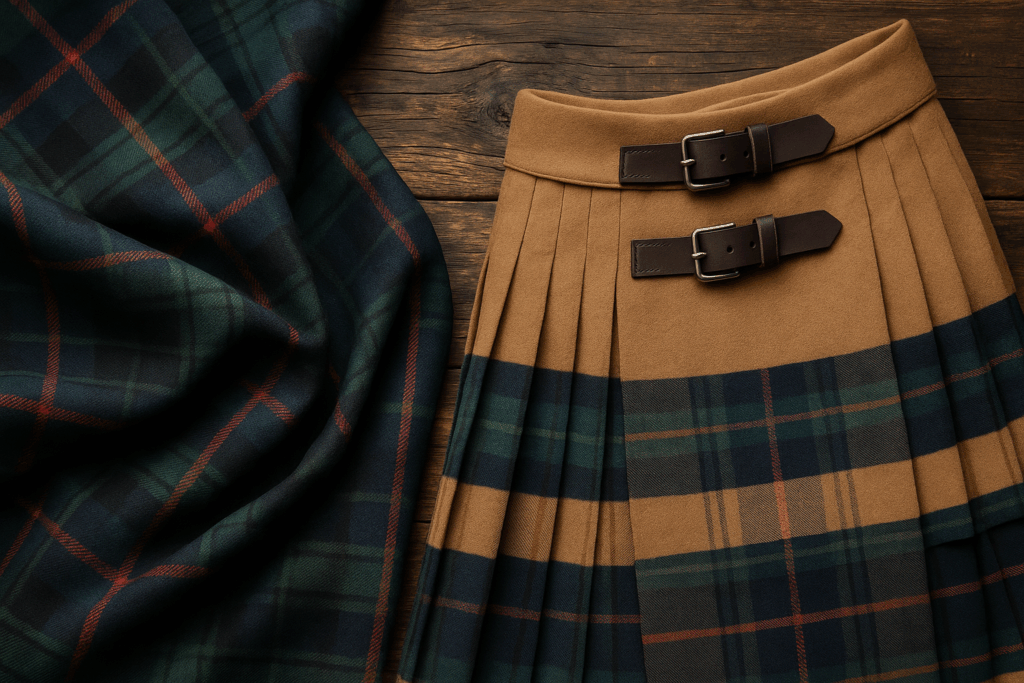
Tartan Is the Fabric. Kilt Is the Form.
- Tartan: A woven fabric pattern featuring colored stripes crossing horizontally and vertically. It’s the material, not the garment.
- Kilt: A pleated, wrapped garment made from tartan or other fabrics. It’s the wearable expression of tradition.
Why the Confusion Exists
The confusion stems from tradition. Since most kilts are made using tartan cloth, people began using the terms interchangeably. But a tartan can appear on scarves, ties, blankets, or even pants. A kilt, however, refers specifically to that pleated, wrap-around garment.
Can a Kilt Be Non-Tartan?
Absolutely. Modern kilts may use solid colors, leather, or even denim. These urban kilts maintain the silhouette but discard the patterned heritage, ideal for men who want the strength and comfort of a kilt with a minimalist twist.
Understanding the distinction between kilt and tartan is more than semantics; it’s the mark of someone who knows what he’s wearing and why. At MenKilt, we’re passionate about turning that knowledge into confidence.
Caring for Your Kilt and Tartan Garment
A handcrafted kilt deserves lifelong care. Here’s how to maintain its beauty and structure.
- Cleaning:
- Wool tartans: dry-clean only.
- Poly-viscose blends: gentle hand-wash.
- Leather kilts: wipe with a damp cloth.
- Storage:
Hang kilts vertically to preserve pleats. Use breathable garment bags. - Maintenance:
Inspect buckles, straps, and seams seasonally. Iron using a press cloth and low heat. - Protection:
Avoid prolonged sun exposure, and air your kilt after each wear to maintain fabric freshness.
Frequently Asked Questions
Why do people confuse tartan with a kilt?
Because most kilts are made using tartan fabric, the terms have blended over time. But tartan is the pattern; the kilt is the garment. Once you know this, you’ll start seeing the distinction everywhere, from fashion runways to Highland ceremonies.
Can a kilt be made from fabric that’s not tartan?
Yes. While traditional kilts use tartan, modern designs can feature solid colors, leather, denim, or hybrid materials. These give a rugged, minimalist twist to the classic silhouette while preserving its structure and heritage feel.
How can I tell if a fabric is an authentic tartan?
Authentic tartans have mirrored, symmetrical patterns in both weave directions. Look for a “sett” that repeats perfectly. Reputable makers like MenKilt source registered tartans, ensuring accuracy in color and thread count.
How do tartan colors affect kilt styling?
Darker tartans read formal and traditional, while lighter or brighter tones lean casual or fashion-forward. Matching your tartan palette with your event type (and personality) is key to pulling off the look with confidence.
Conclusion
The conversation of tartan vs kilt isn’t just historical, it’s deeply personal. The tartan represents identity: the threads of history, family, and artistry. The kilt transforms that identity into movement, expression, and confidence. When you wear a MenKilt piece, you’re not just adopting tradition, you’re rewriting it for today’s world. Explore MenKilt’s latest collection, discover your ideal tartan, and experience what it means to wear heritage with purpose.